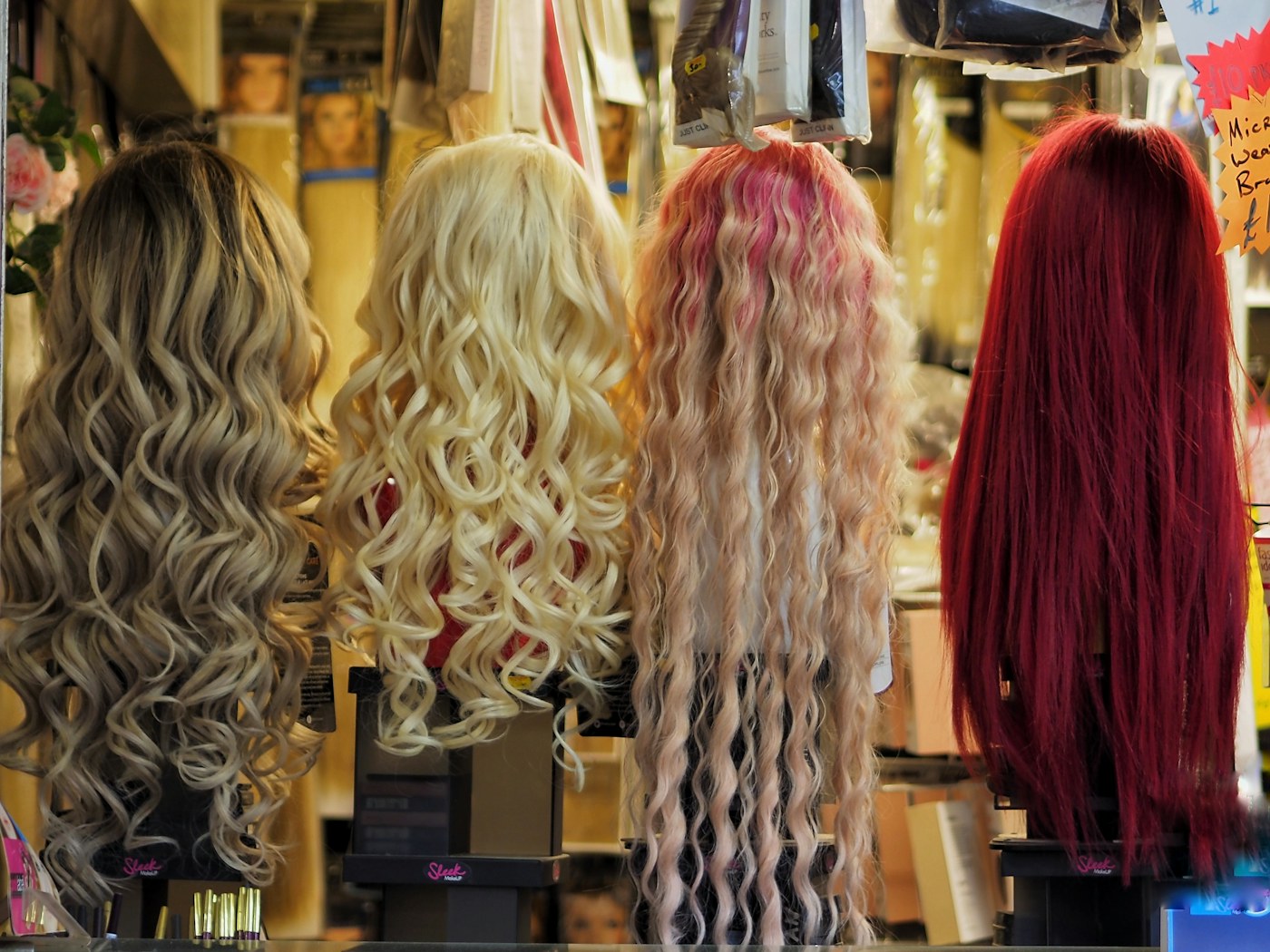
The difference is in the fit, feel, and finish.
A topper can add targeted density; a wig can provide more complete coverage. Let’s compare them in person.
Hair toppers
Toppers are designed to work with existing hair, adding coverage where thinning is most noticeable. The right base size, attachment, color blend and styling plan matter as much as the hair itself.
Ask how a topper attaches, how to protect your existing hair, and how frequently it needs care.
Wigs
Wigs offer broader coverage and can be especially useful for extensive or temporary loss. Our services include both ready-made and custom wig options.
Compare human hair and synthetic fiber, cap construction, scalp sensitivity, styling needs and realistic upkeep.
Choose for your routine, not just the mirror.
Bring photos of styles you like, a sense of how much time you want to spend styling, and any concerns about fit or comfort. If a treatment schedule affects your timing, mention it during the appointment without submitting health records online.
Extensions can add length or fullness, but attachment and tension matter. Ask the specialist to assess whether your existing hair can support them comfortably. The American Academy of Dermatology explains traction-related hair loss.
Partial and full coverage have different tradeoffs
A topper relies on a blend with your hair; a wig provides broader coverage. Each can be selected for comfort, security and the amount of styling you want to do.
Who a topper may suit
Consider a topper when a defined area needs density and there is surrounding hair for blending. Ask whether attachment could pull on fragile hair.
Read the guide →Who a wig may suit
A wig may suit broader loss, changing coverage needs or a removable style. Compare cap construction, size, hairline, fiber and scalp contact.
Read the guide →Extensions need assessment
Extensions can add length or fullness but place weight on existing hair. Ask whether your hair can safely support the proposed method, especially if you are already shedding.
Read the guide →From questions to a fit plan
Bring an image of a style you like, then compare coverage and fit in person. Discuss color, density, parting, attachment or cap, and any adjustments or styling included. Ask for a demonstration of wear and removal.
Care and cost factors
Initial cost varies by fiber, size, construction and customization. Ask about styling, care products, professional adjustments and replacement. For active scalp irritation or unexplained loss, consult a clinician.
Questions to bring
Human hair or synthetic?
Both are options with different styling and care needs. Ask which fiber suits your routine and check heat instructions for the exact piece.
Can I try a piece before deciding?
Ask the studio what samples and fittings are currently available. Comfort and appearance are best assessed on you.
Product fit and cosmetic coverage are separate from medical diagnosis or treatment.
Begin with a private conversation.
We can help you compare real options without guessing what you need from a webpage.
A wig or topper should be selected by more than color alone.
Construction, fiber, cap or base size, density, parting, hairline, texture, heat tolerance and care requirements all affect whether a piece feels natural and manageable.
Offers styling versatility and natural movement, with care needs that vary by processing and quality.
Can hold a preset style and simplify daily care, but heat and restyling limits vary by fiber.
Designed for partial coverage and blending with existing hair, often over the top or crown.
Provides broad scalp coverage and can be appropriate for extensive or temporary hair loss.